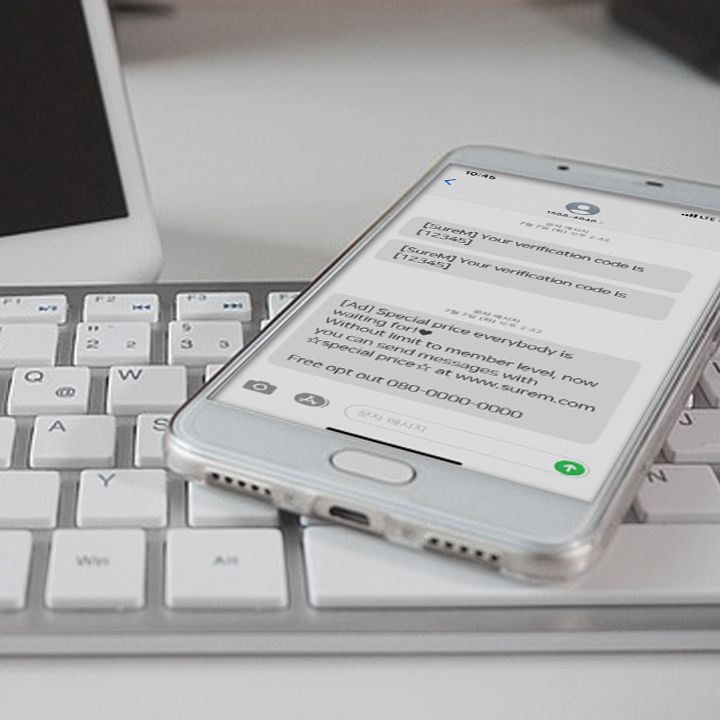
SMS Marked as Delivered but Not Received in South Korea: What You Should Check
International SMS messages sent to South Korea may occasionally show a Delivered status even when the recipient cannot find the message in the main inbox.
This does not always mean that the delivery report is incorrect. In some cases, the mobile network may have accepted the message successfully, but the message may later be filtered, categorized, or hidden by the recipient’s mobile device or spam-protection service.
In this article, we explain why this can happen and what businesses should check when sending A2P SMS to South Korea.
What Does “Delivered” Mean?
A delivery receipt, also known as a DLR, indicates that the message has reached a certain stage in the delivery process.
Depending on the mobile operator and delivery route, a Delivered status may mean that the message was:
Accepted by the destination mobile network
Delivered to the recipient’s mobile device
Successfully processed by the carrier’s messaging system
However, a delivery receipt does not always confirm that the message appeared in the recipient’s primary inbox or that the recipient actually viewed it.
After the carrier accepts the message, additional filtering may still occur at the network, device, or application level.
Why Can a Delivered SMS Be Missing?
Several factors may cause a message to appear as delivered while remaining difficult for the recipient to locate.
1. The Message Was Moved to a Spam Folder
South Korean mobile operators and device manufacturers provide spam-filtering features to protect users from unwanted or potentially harmful messages.
If a message contains certain keywords, unusual links, repeated promotional content, or an unrecognized sender number, it may be automatically moved to a spam or blocked-message folder.
Recipients should check:
The spam message folder
Blocked messages
Recently deleted messages
The carrier’s spam-protection application
The device’s built-in message filtering settings
The exact location may differ depending on the mobile operator, device manufacturer, and messaging application.
2. The Sender Information Was Not Recognized
Messages sent with an unregistered or unfamiliar sender number may be filtered more aggressively.
Businesses sending A2P messages to South Korea should confirm:
Whether the sender ID is permitted
Whether sender registration is required
Whether the displayed sender number may be replaced
Whether the message will be labeled as international or web-originated traffic
A sender ID that works in another country may not display in the same way in South Korea.
3. The Message Content Triggered Filtering
Mobile operators may evaluate message content as part of their spam-prevention process.
Messages may be more likely to be filtered when they contain:
Suspicious or shortened URLs
Repeated promotional phrases
Financial or loan-related keywords
Unclear sender identification
Excessive symbols or unusual formatting
Content that does not match the registered use case
Missing promotional disclosures or opt-out information
Transactional messages, OTP messages, and promotional messages may also be handled differently.
For this reason, businesses should make sure that the message content complies with local operator and regulatory requirements.
4. The Recipient Uses a Carrier Spam-Protection Service
South Korean mobile operators may provide separate spam-protection services or applications.
A message can be accepted by the carrier but then categorized by the carrier’s filtering service before the recipient sees it in the normal inbox.
Recipients may need to check the spam-management service provided by their mobile operator.
5. The Mobile Device Applied Additional Filtering
The recipient’s smartphone may have its own filtering rules.
Common causes include:
The sender number is blocked
Unknown senders are separated
Spam protection is enabled
The messaging application automatically categorizes messages
A third-party security application intercepted the message
The device has delayed message synchronization
Testing should therefore include multiple mobile operators, device manufacturers, and messaging applications whenever possible.
What Should the Sender Check?
When a customer reports that an SMS was not received despite a Delivered status, the sender should collect the following information:
Recipient phone number
Destination mobile operator
Date and time of transmission
Message ID
Delivery receipt status and timestamp
Sender ID or sender number
Exact message content
Message type, such as OTP, notification, or promotion
Device model and operating system
Whether the recipient checked spam or blocked-message folders
This information helps the messaging provider determine whether the issue occurred at the routing, carrier, device, or content-filtering stage.
How to Reduce the Risk of Filtering
Businesses can reduce delivery and visibility issues by following several best practices.
Use compliant sender information
Confirm that the sender number or sender ID is allowed for the destination market and registered where required.
Clearly identify the sender
The recipient should be able to understand which company sent the message and why it was sent.
Avoid suspicious links and wording
Use a recognizable domain, avoid unnecessary URL shorteners, and remove wording that could resemble spam or phishing.
Separate transactional and promotional traffic
OTP and service notifications should not be mixed with marketing content. Different message types may require different routes, templates, or compliance procedures.
Test before launching
Conduct tests across the major South Korean mobile operators and different device environments before sending at scale.
Review carrier-level reports
A general delivery rate may not reveal operator-specific issues. Businesses should monitor results by carrier, route, message type, and error code.
Delivery Status and User Visibility Are Not Always the Same
A Delivered status is an important technical signal, but it should not be treated as absolute confirmation that the recipient saw the message in the main inbox.
For South Korea-bound A2P traffic, businesses should consider the complete delivery path:
Messaging platform → international route → Korean mobile operator → carrier filtering → recipient device → messaging application
An issue can occur at any stage after the provider initially accepts the message.
Accurate troubleshooting therefore requires delivery reports, route information, message-content review, and recipient-side confirmation.
How SureM Can Help
SureM supports international A2P SMS delivery to and from South Korea and helps businesses investigate delivery and visibility issues.
Support may include:
Delivery receipt analysis
Carrier and route review
Sender ID guidance
Message-content review
Korea-specific messaging support
OTP and transactional traffic consultation
International SMS API and SMPP integration support
Technical monitoring and troubleshooting
When contacting SureM, please provide the message ID, destination number, sending time, sender information, and message content so the technical team can investigate the case more efficiently.
Contact Us
Email: intlsales@surem.com
Phone: +82-1588-4640
Website: www.surem.net